 EN
EN

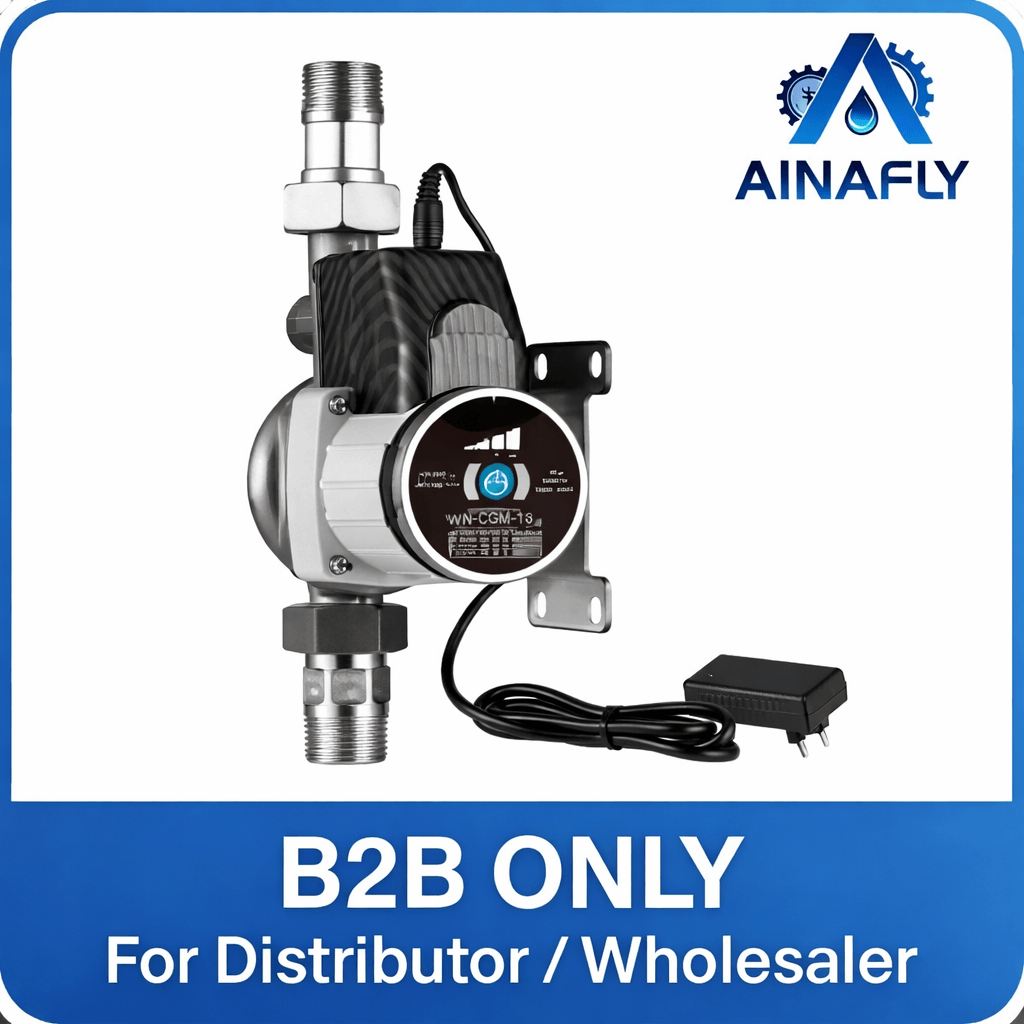
Water pumps play an essential role in moving water from one location to another, maintaining pressure, supporting drainage, irrigation, cooling, and many other daily and industrial operations. From supplying water to a family home to supporting large-scale factories and agricultural projects, different types of water pumps are designed for different working conditions.
Understanding how water pumps are used across residential and industrial sectors can help buyers choose the right pump according to flow rate, head, application, installation environment, and power requirements.
What Is a Water Pump?
A water pump is a mechanical or electromechanical device used to transfer water by creating pressure and flow.
Depending on the application, water pumps can be used to:
- Increase household water pressure
- Pump water from wells
- Transfer water between tanks
- Drain flooded areas
- Irrigate farmland
- Circulate water in cooling systems
- Remove wastewater
- Support industrial production processes
The correct pump selection depends on factors such as required flow rate, pumping head, water source, pipe diameter, liquid condition, operating time, and installation environment.
How Are Water Pumps Used in Residential Applications?
Residential water pumps are mainly used for household water supply, pressure boosting, drainage, and garden irrigation.
1. Household Water Pressure Boosting
Low water pressure is a common problem in multi-story houses, villas, apartments, and buildings located far from the main water supply.
A booster pump increases water pressure so that showers, faucets, washing machines, water heaters, and other household equipment can operate normally.
Common choices include:
- Booster pumps
- Peripheral pumps
- Centrifugal pumps
- Jet pumps
- Automatic variable-frequency pumps
Modern automatic booster pumps can detect changes in water demand and start or stop automatically, making household water supply more convenient.
2. Water Supply from Wells
In areas without stable municipal water supply, groundwater is often an important source of domestic water.
Deep well submersible pumps are installed inside the well and push water upward to storage tanks or directly into household water systems.
They are commonly used for:
- Rural homes
- Villas
- Farms
- Residential buildings
- Remote properties
When selecting a deep well pump, buyers should pay particular attention to well depth, water level, required head, flow rate, borehole diameter, voltage, and outlet size.
3. Water Transfer Between Storage Tanks
Many homes use water storage tanks, especially in areas where municipal water supply is intermittent.
Water pumps can transfer water:
- From underground tanks to rooftop tanks
- From wells to storage tank
- Between two water tanks
- From rainwater tanks to household systems
Centrifugal, peripheral, and automatic booster pumps are commonly used for these applications.
4. Garden and Lawn Irrigation
Residential pumps are also widely used for watering gardens, lawns, trees, and small agricultural areas.
Depending on the water source, users may choose:
- Surface pumps
- Jet pumps
- Submersible pumps
- Deep well pumps
The pump should provide sufficient flow and pressure for sprinklers, hoses, or small irrigation systems.
5. Household Drainage
Submersible drainage pumps are useful for removing accumulated water from:
- Basements
- Swimming pools
- Water tanks
- Construction areas
- Underground garages
- Flooded rooms
Some models are equipped with float switches that automatically start the pump when the water level rises and stop it when the water level falls.
How Are Water Pumps Used in Industrial Applications?
Industrial water pumping requirements are usually more demanding than residential applications. Pumps may need to operate for longer periods, handle larger flow rates, generate higher pressure, or work with wastewater and other liquids.
1. Industrial Water Supply
Factories require stable water supply for production, cleaning, processing, employee facilities, and equipment operation.
Centrifugal pumps are widely used because they can provide continuous water flow and are available in many different capacities.
Industrial water supply systems may use multiple pumps together to maintain stable pressure and meet changing water demand.
2. Cooling and Circulation Systems
Many industrial machines generate heat during operation.
Water pumps circulate cooling water through equipment, pipelines, cooling towers, or heat exchangers to maintain suitable operating temperatures.
Typical applications include:
- Manufacturing equipment
- HVAC systems
- Cooling towers
- Production machinery
- Industrial processing systems
Reliable circulation is important because insufficient cooling can affect production efficiency and equipment life.
3. Agricultural and Irrigation Projects
Agriculture represents another major application for water pumps.
Farmers use pumps to move water from:
- Rivers
- Wells
- Reservoirs
- Lakes
- Storage tanks
The water is then delivered to irrigation systems such as sprinklers, drip irrigation lines, or open channels.
Centrifugal pumps, deep well pumps, submersible pumps, and solar-powered water pumps are all commonly used depending on the project.
Solar water pumps are increasingly attractive in remote agricultural areas where electricity supply is limited.
4. Wastewater and Sewage Treatment
Industrial facilities often need to remove wastewater containing suspended particles or other impurities.
Sewage pumps and wastewater submersible pumps are designed for these applications.
They can be used in:
- Factories
- Municipal drainage
- Construction sites
- Sewage treatment facilities
- Farms
- Commercial buildings
Compared with clean-water pumps, sewage pumps normally feature larger flow passages to reduce the risk of blockage.
5. Construction and Dewatering
Water accumulation can significantly affect construction projects.
Submersible drainage pumps are commonly used to remove groundwater and rainwater from:
- Foundations
- Tunnels
- Excavation sites
- Underground projects
- Construction pits
Portable submersible pumps are especially useful because they can be quickly moved to different locations.
6. Fire Protection and Emergency Water Supply
Water pumps are also important components in fire protection systems.
They help maintain sufficient water pressure for firefighting equipment and emergency water supply.
Because fire protection is safety-critical, pump selection and system design must comply with applicable local regulations and engineering standards.
Residential vs. Industrial Water Pumps
Although both residential and industrial pumps perform the same basic function—moving water—their operating requirements can be very different.
Residential pumps normally focus on:
- Compact size
- Low noise
- Automatic operation
- Easy installation
- Household water pressure
- Moderate flow requirements
- Industrial pumps often require:
- Higher flow rates
- Higher pumping heads
- Longer operating hours
- Greater durability
- Larger motors
- More demanding operating conditions
Therefore, choosing a pump based only on motor power is not enough.
How to Choose the Right Water Pump
Before purchasing a water pump, several key parameters should be confirmed.
Flow Rate
Flow rate indicates how much water the pump can deliver within a specific period, commonly measured in liters per minute or cubic meters per hour.
Pumping Head
Head indicates how high or how far the pump needs to move water while overcoming pressure losses in the pipeline.
Water Source
The pump type depends heavily on whether the water comes from a shallow well, deep well, river, tank, reservoir, or municipal pipeline.
Installation Type
Surface pumps are installed outside the water source, while submersible pumps operate directly inside the water.
Liquid Condition
Clean water, wastewater, sewage, and water containing particles require different pump designs.
Power Supply
Buyers should confirm:
- Voltage
- Frequency
- Single-phase or three-phase power
- Available electrical capacity
These specifications may vary significantly between different countries and projects.
Conclusion
Water pumps are used almost everywhere water needs to be transferred, pressurized, circulated, drained, or supplied.
In residential applications, pumps are commonly used for household pressure boosting, well water supply, tank transfer, garden irrigation, and drainage.
In industrial applications, water pumps support manufacturing, agriculture, cooling systems, construction, wastewater treatment, and large-scale water supply.
The most important step is selecting the pump according to the actual application instead of simply choosing the highest-power model.
A suitable pump should provide the required flow and head while maintaining reliable and efficient operation.
If you are sourcing water pumps for residential, agricultural, commercial, or industrial projects, providing information such as your required flow rate, pumping head, voltage, frequency, water source, and application will make it much easier to identify the right pump solution.