 EN
EN

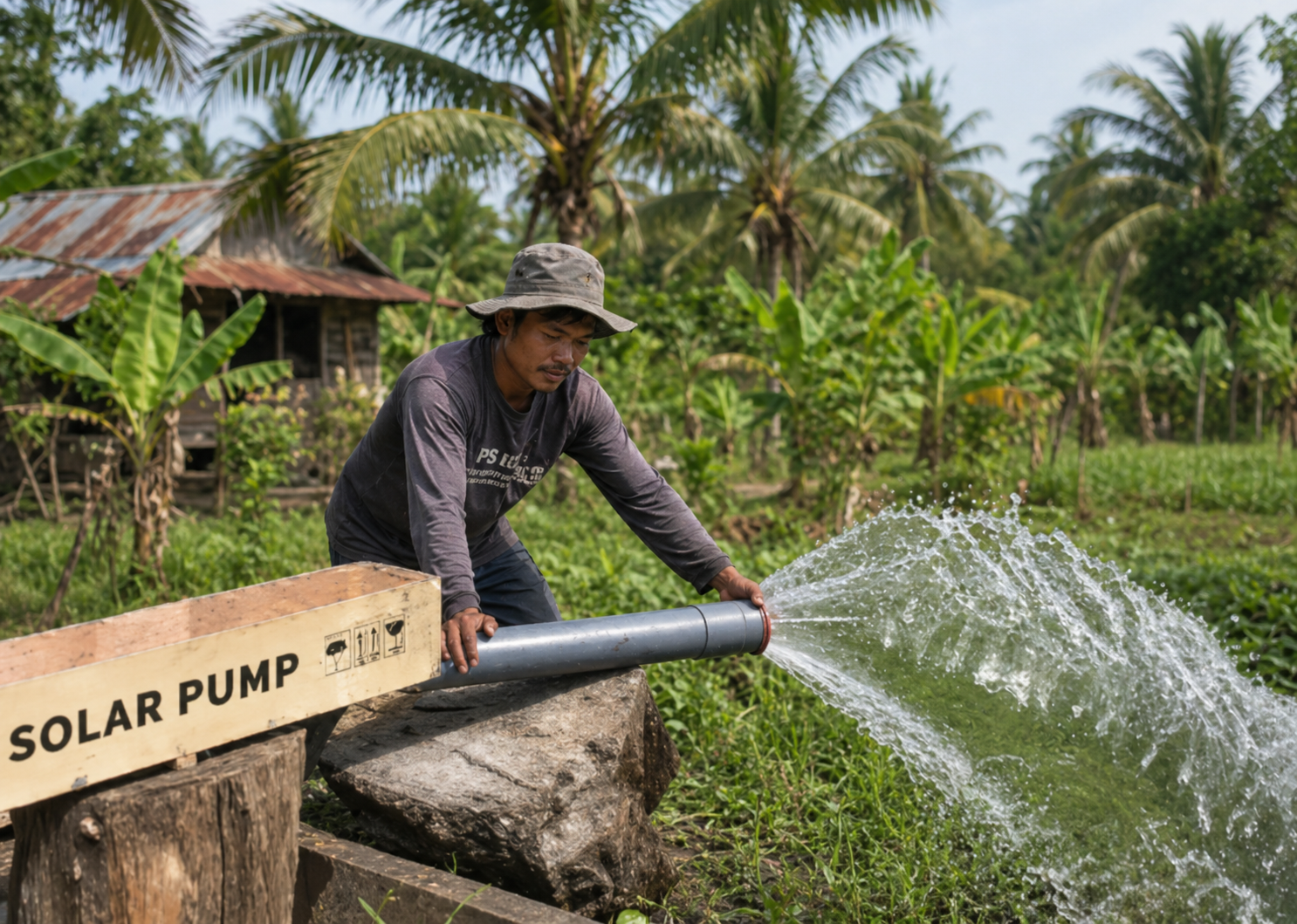
Access to reliable electricity remains a challenge in many farms, villages, construction sites and remote water supply projects. However, a water pump does not always need to be connected to the public power grid.
A solar pump system uses energy generated by solar panels to operate a water pump. Depending on the system design, the pump can work directly during daylight hours or use stored energy when sunlight is unavailable.
So, how does a solar water pump work without grid electricity? This article explains the main components, operating process and important factors involved in designing an off-grid solar pumping system.
Does a Solar Pump Really Work Without Electricity?
A solar pump does not work without energy. Instead, it works without grid electricity.
The system converts sunlight into electrical energy through photovoltaic solar panels. This energy is then managed by a solar pump controller or inverter and supplied to the water pump.
In other words, the energy flow is:
Sunlight → Solar Panels → Pump Controller or Inverter → Water Pump → Water Storage or Distribution System
Because the system produces its own electricity, it can operate in locations where grid power is unavailable, unstable or expensive to install.
Main Components of a Solar Pump System
A complete solar pump system normally includes the following components.
1. Solar Panels
Solar panels capture sunlight and convert it into direct current electricity.
The number and power of the panels depend on several factors, including:
- Pump power
- Required water flow
- Total pumping head
- Local solar radiation
- Daily operating hours
- Seasonal weather conditions
The solar array must provide enough voltage and power to start and operate the pump under normal sunlight conditions.
2. Solar Pump Controller
The controller is one of the most important parts of a solar pumping system.
It regulates the electricity produced by the solar panels and provides stable power to the pump. Many modern solar pump controllers use Maximum Power Point Tracking, commonly known as MPPT, to improve energy utilization when sunlight changes.
A solar pump controller may also provide protection against:
- Dry running
- Overvoltage
- Undervoltage
- Overcurrent
- Motor overload
- Reverse polarity
- Water tank overflow
These protection functions help improve system reliability and extend pump service life.
3. DC or AC Water Pump
Solar pumping systems can use either DC pumps or AC pumps.
A DC solar pump can usually receive power directly from a compatible solar controller. It is often used in small and medium-sized systems because of its simple structure and efficient energy conversion.
An AC water pump requires a solar pump inverter. The inverter converts the direct current electricity generated by the panels into alternating current electricity suitable for the AC motor.
The pump may be:
- A deep well submersible pump
- A surface centrifugal pump
- A solar irrigation pump
- A sewage or drainage pump
- A booster pump
The correct pump type depends on the water source and application.
4. Water Level Sensors
Water level sensors can be installed in the well and storage tank.
A low-water sensor protects the pump when the water level in the well becomes too low. A tank-level sensor stops the pump when the storage tank is full.
Automatic control reduces unnecessary operation and helps prevent pump damage.
5. Water Storage Tank
A water storage tank is often more practical than a battery bank.
During sunny hours, the pump transfers water into the tank. The stored water can then be used in the evening, at night or during cloudy periods.
This approach stores energy in the form of water rather than electricity. It usually reduces system cost and maintenance requirements.
6. Optional Battery System
Batteries can be added when water must be pumped outside daylight hours.
However, batteries increase the initial investment and require additional management. Battery capacity, charging performance, operating temperature and service life must all be considered.
For many agricultural and domestic water projects, pumping water into an elevated storage tank during the day is a more economical solution.
How Does the System Operate During the Day?
When sunlight reaches the solar panels, the panels begin producing electricity.
The controller checks whether the available voltage and power are sufficient to start the pump. Once the starting conditions are met, the pump begins operating.
Under strong sunlight, the pump can run closer to its rated performance. When solar radiation decreases, the controller adjusts the operating frequency or motor speed according to the available power.
As a result, the water flow may change throughout the day.
The pump typically produces less water in the early morning and late afternoon, while the highest output is generally achieved around the middle of the day.
What Happens on Cloudy Days?
Solar pumps can still operate under some cloudy conditions, but their performance depends on the intensity of the available sunlight.
Light cloud cover may only reduce the pump speed and flow rate. Heavy clouds can reduce solar power below the minimum starting requirement, causing the controller to stop the pump temporarily.
When sufficient sunlight returns, the system can restart automatically.
This is why solar pump systems should be designed according to daily water demand rather than only the pump’s maximum flow rate.
A properly sized water tank can also provide a reserve for cloudy periods.
How Does a Solar Pump Work at Night?
A direct solar pump system normally stops working after sunset because the panels are no longer producing electricity.
There are three common solutions for nighttime water supply:
- Store water in a tank during daylight hours.
- Add batteries to supply electricity at night.
- Use a hybrid controller that can receive power from solar panels, the grid or a generator.
For most irrigation and livestock watering applications, daytime pumping combined with water storage is the preferred option.
For applications requiring continuous pumping, a hybrid or battery-supported system may be necessary.
How Is the Correct Solar Pump System Selected?
Choosing a solar pump is not based only on motor power.
The following information should be confirmed before system selection:
Water Source
The water may come from a borehole, well, river, pond, reservoir or storage tank. The water source determines whether a submersible or surface pump is more suitable.
Total Dynamic Head
Total dynamic head includes:
- Vertical lifting height
- Required outlet pressure
- Friction loss in the pipe
- Changes in water level
- Distance between the pump and discharge point
Ignoring pipe losses can result in insufficient flow after installation.
Daily Water Demand
The system should be designed according to the total volume of water required per day.
For example, an irrigation project may require a high flow rate for several hours, while a livestock watering system may require a smaller but more consistent daily supply.
Local Solar Conditions
The number of effective sunlight hours varies by country, season and installation location.
A system designed for a region with strong year-round sunlight may not provide the same output in an area with long cloudy seasons.
Borehole Yield
The pump flow should not exceed the sustainable water production of the well.
Selecting an oversized pump may cause rapid water-level decline and frequent dry-running protection.
Can Existing Water Pumps Be Used with Solar Panels?
In some cases, an existing AC pump can be operated by a solar pump inverter.
However, the inverter, solar panels and pump must be properly matched. The motor starting requirements, rated current, operating voltage and pump performance must all be checked.
Connecting solar panels directly to a conventional AC pump is not recommended.
For a new project, selecting a complete solar pumping system usually provides better compatibility and protection.
Key Benefits of an Off-Grid Solar Pump System
A properly designed solar pump system can provide several benefits:
- No dependence on the public electricity grid
- Reduced diesel fuel consumption
- Lower daily operating costs
- Automatic operation during sunlight hours
- Suitable for remote installations
- Expandable solar panel configuration
- Reduced maintenance compared with generator systems
- Flexible use for agriculture, livestock and domestic water supply
However, these benefits depend on correct system sizing and installation.
Conclusion
A solar pump system works without grid electricity by converting sunlight into electrical energy and using a controller or inverter to power the water pump.
The system can operate directly during daylight hours, store water for later use or combine solar energy with batteries, a generator or grid power.
The key to reliable operation is not simply installing more solar panels. The pump, controller, solar array, water source, total head and daily water demand must be considered as one complete system.
AINAFLY provides solar deep well pumps, solar submersible pumps and customized solar pumping solutions for agricultural irrigation, livestock watering, domestic water supply and remote projects.
Contact the AINAFLY team to receive a suitable pump and solar panel configuration based on your project requirements.
Table of Contents
- Does a Solar Pump Really Work Without Electricity?
- Main Components of a Solar Pump System
- How Does the System Operate During the Day?
- What Happens on Cloudy Days?
- How Does a Solar Pump Work at Night?
- How Is the Correct Solar Pump System Selected?
- Can Existing Water Pumps Be Used with Solar Panels?
- Key Benefits of an Off-Grid Solar Pump System
- Conclusion